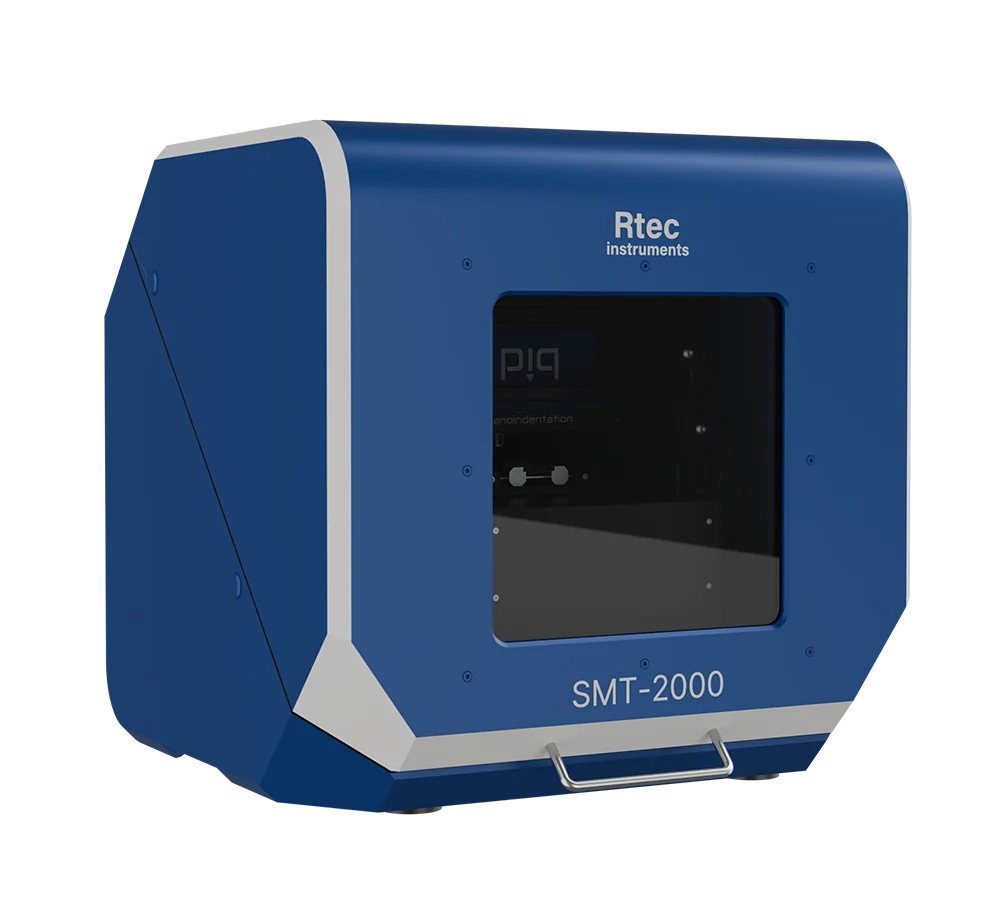
Scratch and Indentation Tester
SMT-2000 Nanoindentation Excellence – Where Nanoscale Accuracy Meets Reliability
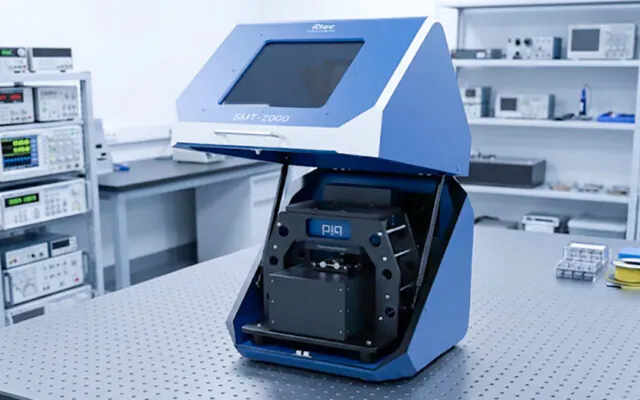
The SMT-2000 PiQ Nanoindenter represents a new generation of nanoindentation technology designed for ultra-precise mechanical characterization at the nanoscale. Its advanced PiQ nanoindenter head integrates high-performance piezoelectric actuation with true force and true depth sensing, ensuring highly accurate and repeatable hardness and elastic modulus measurements. An automated XYZ motorized stage enables high-throughput mapping and precise positioning across the entire sample surface. The integrated optical microscope provides detailed surface visualization and accurate indentation placement. Together, these features make the system ideal for reliable testing of coatings, thin films, and micro-scale structures in both research and industrial applications.
KEY FEATURES
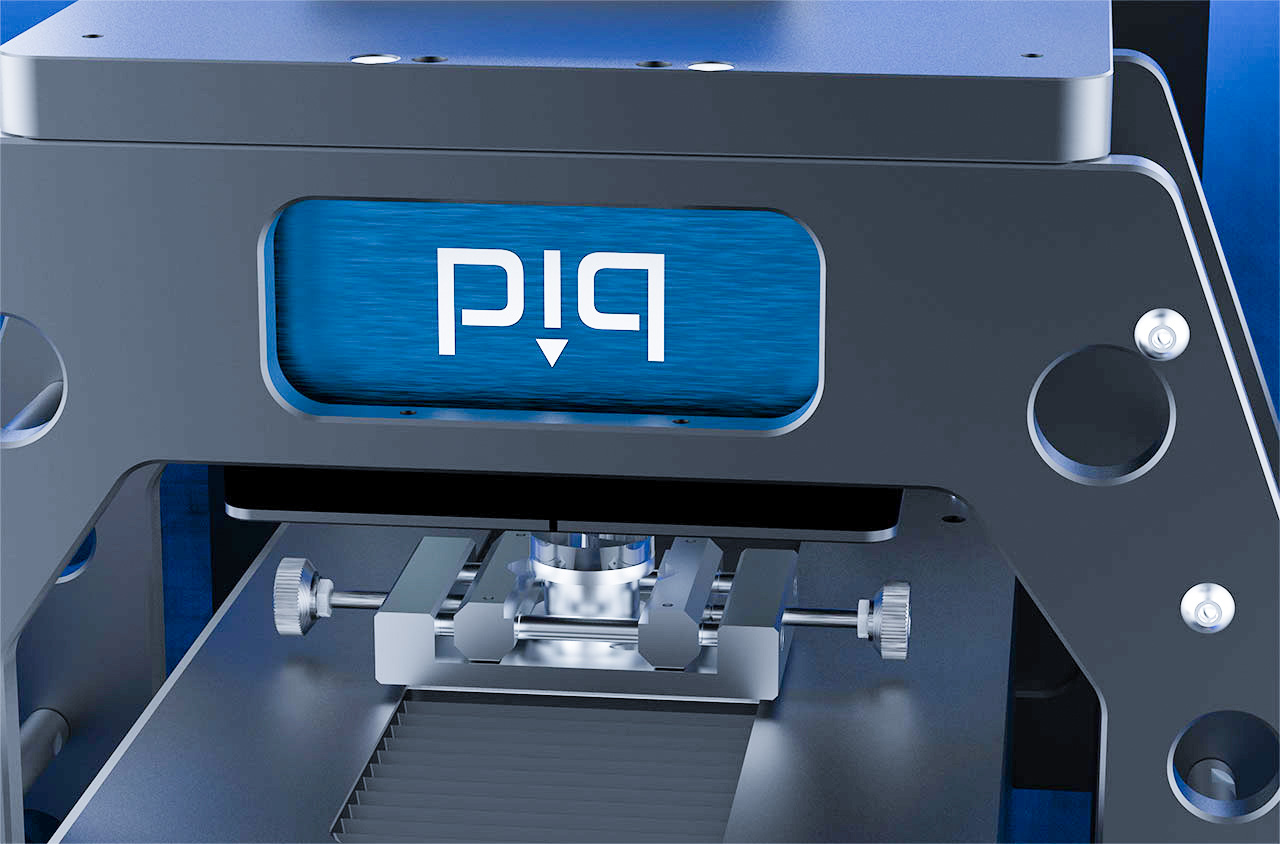
Automated XYZ Motorized Stage
The system features fully automated X–Y mapping for matrix-based indentation across entire sample surfaces. Furthermore, its high-throughput capability enables unattended and overnight testing, therefore maximizing productivity.
With ~1 µm positioning accuracy, it additionally ensures reliable, repeatable results. Moreover, flexible area selection allows precise targeting of specific regions for advanced, efficient materials characterization.
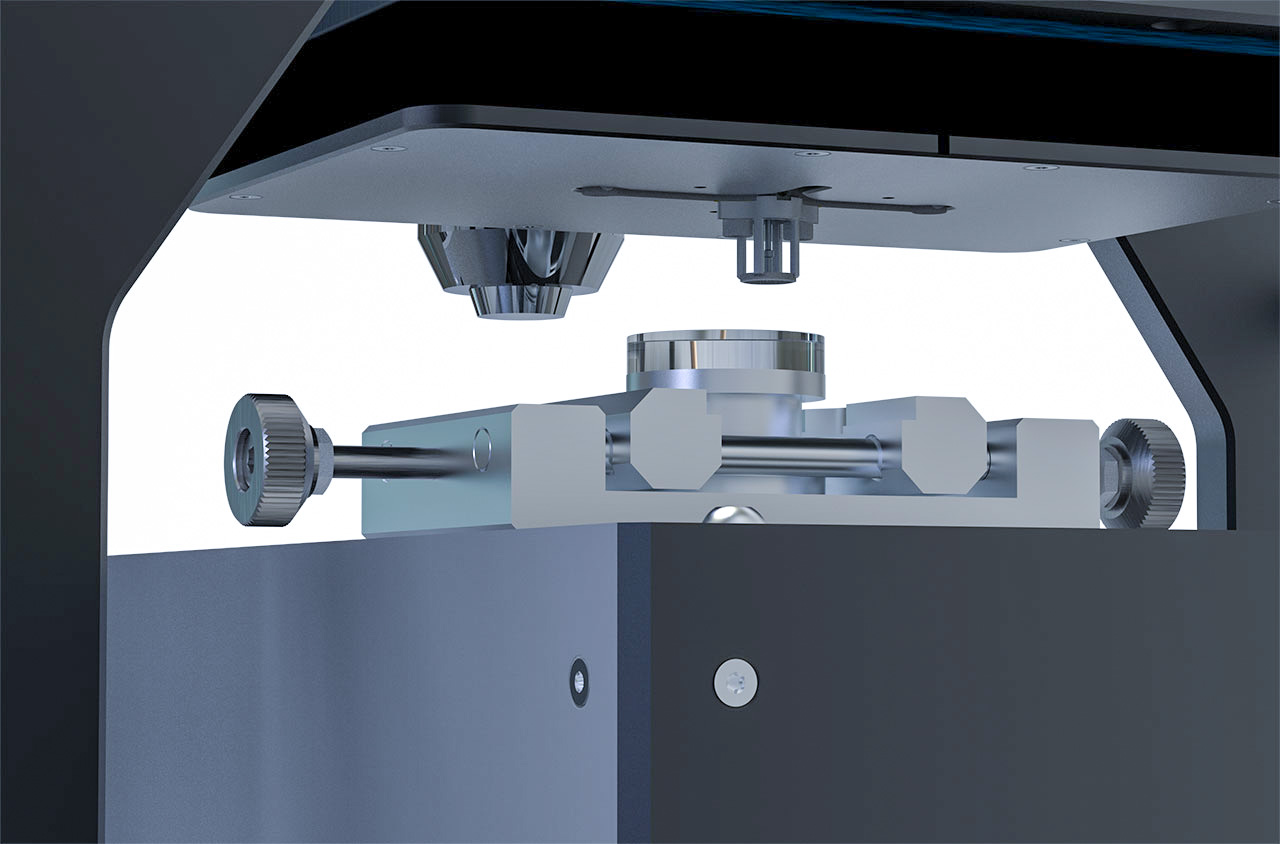
Integrated Optical Microscope
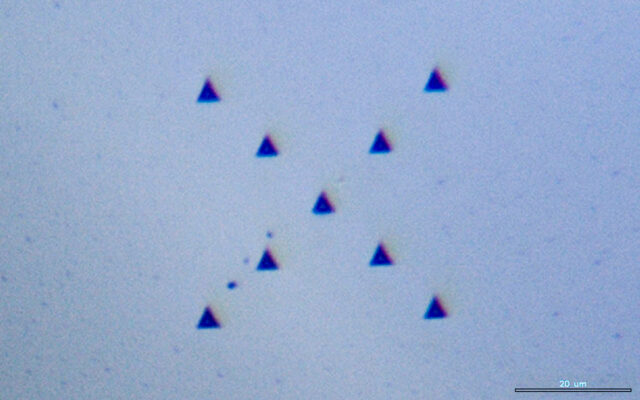
The SMT-2000 features an integrated optical microscope for precise visualization and positioning of indentation locations. It enables detailed inspection of surface defects, roughness, and microstructural features prior to testing. Users can easily select exact indentation points through the interface, ensuring accurate placement and reliable, repeatable nanoindentation measurements.
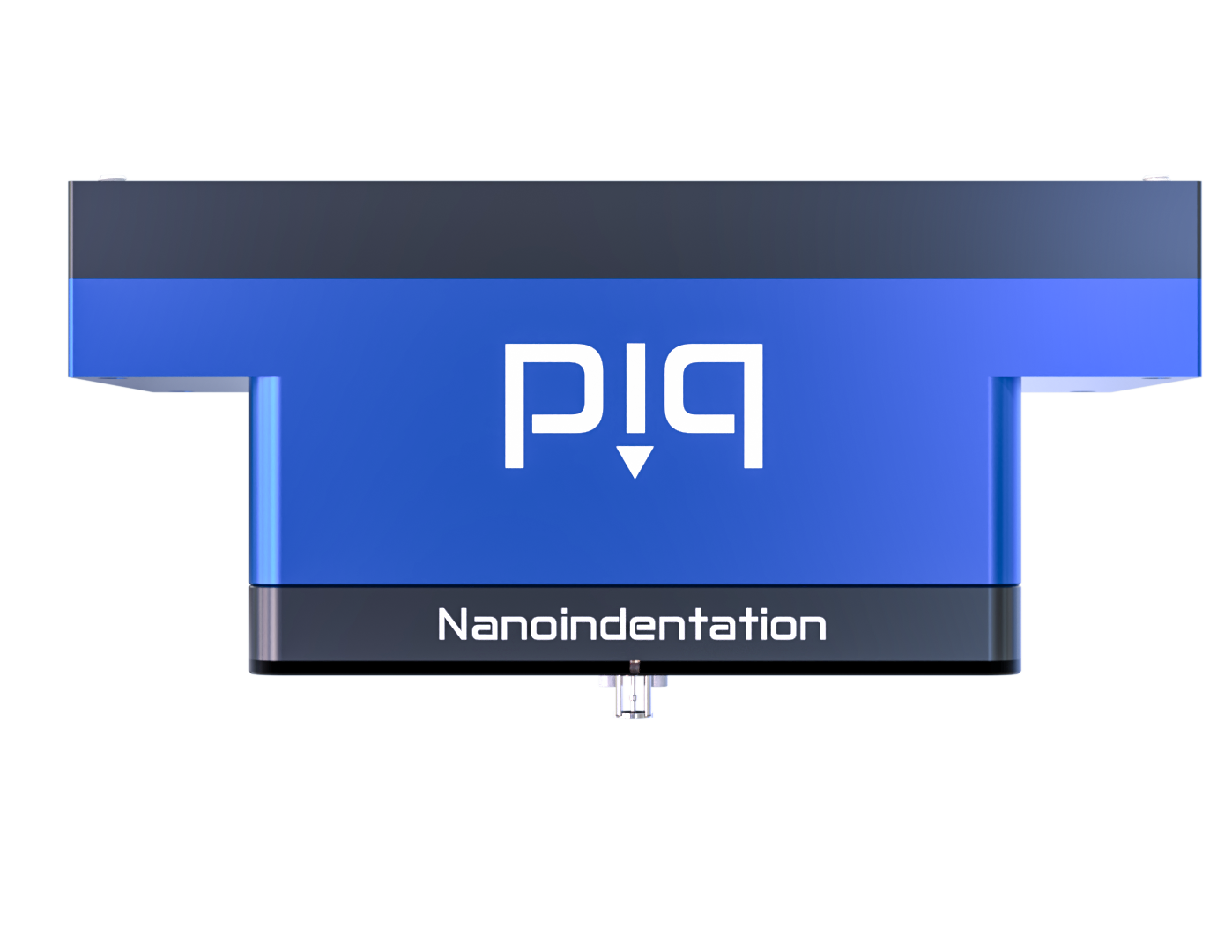
True Force and True Depth Measurement
The PiQ nanoindenter head integrates independent true force and true depth sensors, providing continuous metrological monitoring throughout the entire indentation cycle.
This dual-sensor architecture ensures high-accuracy load and displacement measurements, delivering reliable mechanical property data even for thin films, coatings, and micro-scale structures.
Ultra-Fast Piezoelectric Actuation
A high-performance piezoelectric actuator drives the nanoindentation process with nanometer-scale positioning accuracy and ultra-fast response time.
This advanced actuation system enables precise load control and dynamic indentation testing, ensuring highly repeatable measurements across a wide range of materials.
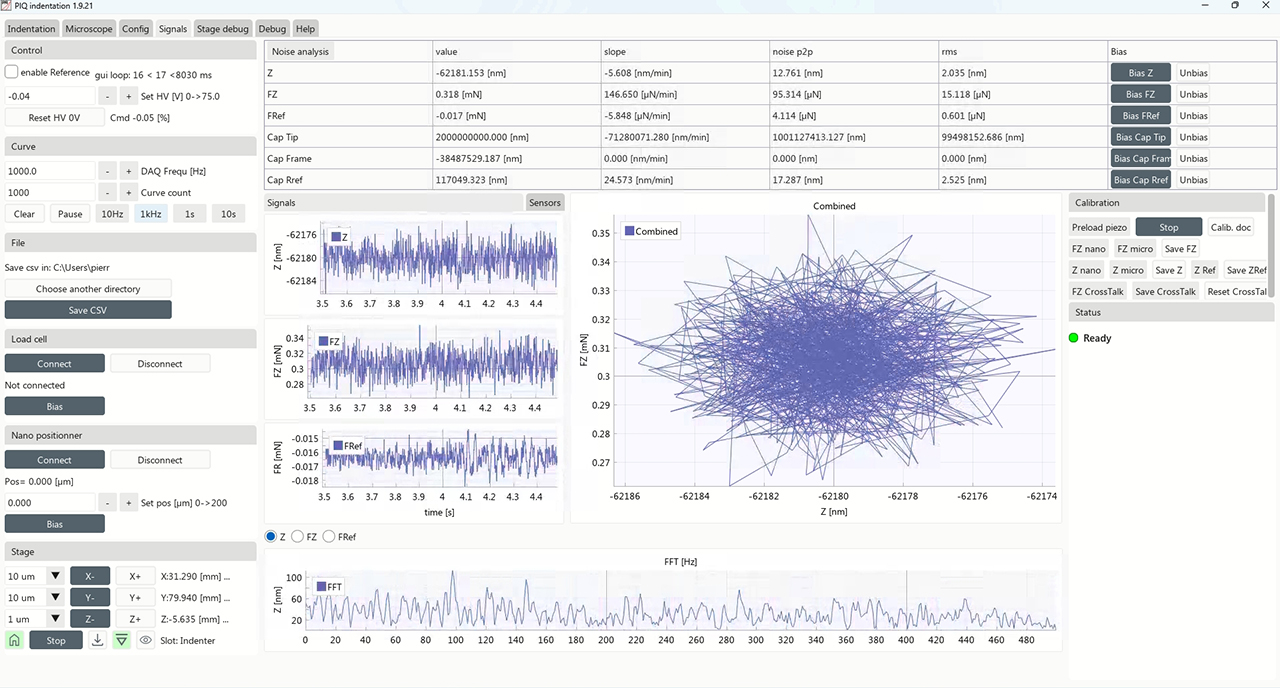
Enhanced Measurement Stability and Noise Isolation
The SMT-2000 features a soundproof enclosure combined with integrated vibration damping to ensure highly stable measurement conditions. Special absorbing anti-vibration polymeric feet minimize external disturbances, reducing noise and environmental influence. This design enables precise, repeatable nanoindentation results, even in standard laboratory environments where vibrations and acoustic interference are present.
More about
The SMT-2000 PiQ Nanoindenter | Nanoindentation Testing System is designed to deliver precise and reliable nanoindentation results for advanced material research. This cutting-edge system truly excels as a Nanoindentation Testing System for users investing in SMT-2000 PiQ technology. This SMT-2000 PiQ Nanoindenter | Nanoindentation Testing System provides consistent performance for various laboratory needs.
Nanoindentation Mapping for Hardness and Elastic Modulus Measurement
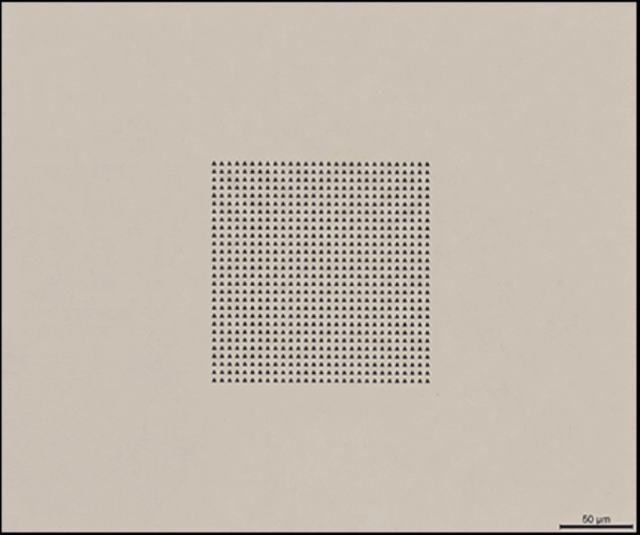
Nanoindentation mapping is an advanced mechanical characterization technique. It measures the spatial distribution of material properties such as hardness and elastic modulus with micrometer- to nanometer-scale resolution.
By performing a grid of precisely spaced indentations across a sample surface, researchers therefore generate detailed property maps. These maps consequently reveal variations associated with different phases, grain boundaries, coatings, and defects, making the SMT-2000 PiQ system uniquely suitable as a full Nanoindenter for all your Nanoindentation Testing System needs.
Furthermore, nanoindentation mapping is widely used in materials science, metallurgy, semiconductors, polymers, and thin-film research. As a result, this Nanoindenter and Nanoindentation Testing System supports better understanding of material performance, optimizing processes, and developing advanced materials.
Integrated Optical Microscope
The SMT-2000 system includes an integrated optical microscope, enabling precise visualization and positioning of indentation locations. In addition, the combination of SMT-2000 PiQ hardware with Nanoindenter and powerful Nanoindentation Testing System functionality gives superior mapping capability.
Advanced Sample Visualization: Inspect the sample surface to identify defects, roughness, and microstructural features before testing.
Precise Indentation Placement: Easily select the exact indentation location directly through the optical microscope interface.
For laboratories needing both accuracy and versatility, it’s clear the complete SMT-2000 PiQ is a premier Nanoindenter offering all Nanoindentation Testing System capabilities and more.
Ease of Use
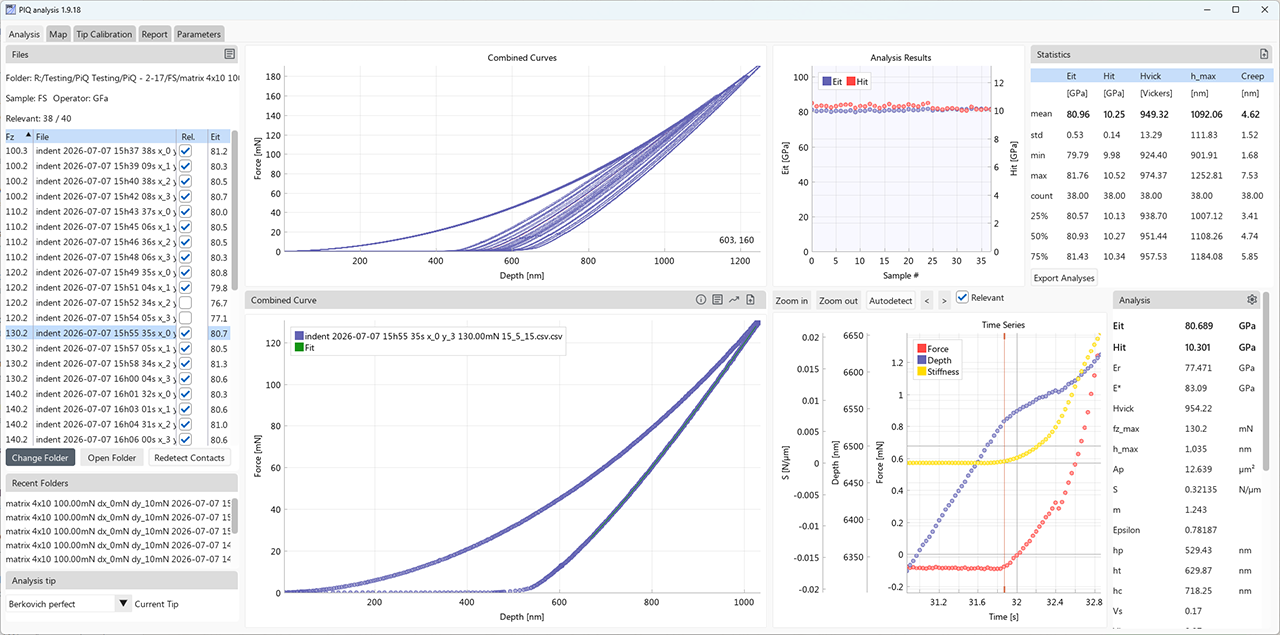
With the click of a button, the SMT-2000 performs fully automated indentation testing with no prior experience required. What’s more, users benefit from working with the advanced SMT-2000 PiQ, the ideal choice for modern Nanoindenter and Nanoindentation Testing System deployment. Furthermore, integrated help files and an intuitive workflow allow new users to become productive in minutes.
Automatic tip calibration, method setup, and report generation additionally ensure accurate and repeatable results for every test run using this complete Nanoindenter and Nanoindentation Testing System platform.
These features therefore make the SMT-2000 an ideal solution for both quality control and advanced research applications.
PiQ Nanoindenter Head Technology
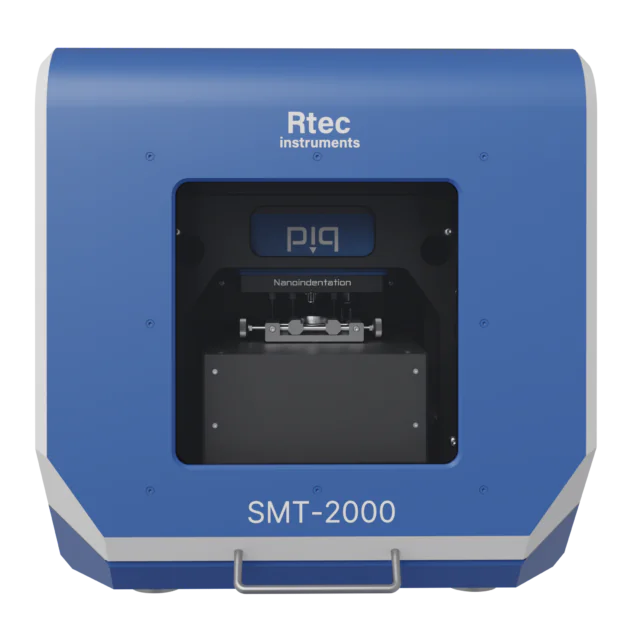
The PiQ Nanoindenter Head represents a new generation of nanoindentation technology designed for ultra-precise mechanical characterization at the nanoscale. Built on a patented architecture, the system combines advanced actuation, true metrological sensing, and an innovative referencing system to deliver exceptional accuracy, stability, and repeatability. For this reason, modern labs looking for a cutting-edge Nanoindenter and Nanoindentation Testing System benefit from the SMT-2000 PiQ solution.
Engineered for demanding materials research, thin film analysis, and advanced coatings characterization, the PiQ nanoindenter head ensures reliable determination of instrumented hardness (HIT) and indentation modulus (EIT) even on extremely small material volumes.
Ultra-Fast Piezoelectric Actuation
A high-performance piezoelectric actuator drives the nanoindentation process with nanometer-scale positioning accuracy and ultra-fast response time. This advanced actuation system enables precise load control and dynamic indentation testing, ensuring highly repeatable measurements across a wide range of materials. Notably, the SMT-2000 PiQ stands out as both a Nanoindenter and the go-to Nanoindentation Testing System for researchers.
True Force and True Depth Measurement
The PiQ nanoindenter head integrates independent true force and true depth sensors, providing continuous metrological monitoring throughout the entire indentation cycle. This dual-sensor architecture ensures high-accuracy load and displacement measurements, delivering reliable mechanical property data even for thin films, coatings, and micro-scale structures.
In summary, laboratories worldwide select the SMT-2000 PiQ for superior results, as it serves as both a state-of-the-art Nanoindenter and a robust Nanoindentation Testing System in one platform.
| Maximum indentation load | 500 mN |
|---|---|
| Load resolution | 0,015 μN |
| Load noise floor [rms] | 1 μN |
| Maximum indentation depth | 200 μm |
| Depth resolution | 0.005 nm |
| Depth noise floor [rms] | 0.1 nm |
| Data acquisition rate | 1 MHz |
| XYZ Stage | 50 x 180 x 15 mm |
| Resonance Frequency | 260 Hz |
| Size | 40 x 40 x 40 cm |
| Weight | 30 kg |