Introduction
Friction and wear are fundamental phenomena that determine the performance, efficiency, and service life of mechanical components across virtually every industry. Understanding and controlling these interactions is essential for engineers and researchers working to optimize materials, coatings, lubricants, and surface treatments.
What Is Friction and Wear Testing?
Friction and wear testing quantifies the tribological behavior of materials and surfaces under controlled contact conditions. It measures key parameters such as coefficient of friction (COF), wear rate, wear volume, and surface damage progression. These measurements provide critical insight into how materials interact under load, speed, and environmental conditions.
Why Friction and Wear Testing Matters
Friction and wear directly influence energy consumption, component reliability, and maintenance costs. Furthermore, excessive wear leads to premature failure, reduced efficiency, and increased downtime. As a result, friction and wear testing is essential for material selection, coating qualification, lubricant development, and quality control across automotive, aerospace, medical, industrial, and energy applications.
Common Friction and Wear Test Methods
Researchers and engineers use a wide range of standardized test configurations to evaluate friction and wear behavior. These include pin-on-disk, ball-on-disk, linear reciprocating, block-on-ring, and fretting wear tests. Each method replicates specific contact geometries and motion conditions found in real applications. Furthermore, tests can be performed under dry, lubricated, high-temperature, cryogenic, vacuum, or electrified conditions to match operating environments.
Key Measurements
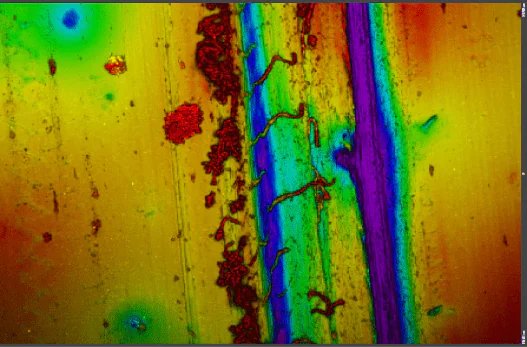
Friction and wear testing provides quantitative data including coefficient of friction, friction force, wear scar geometry, wear volume, surface roughness, and material loss. Additionally, in-line 3D profilometry enables real-time monitoring of surface evolution and wear track development during the test — eliminating the need for sample removal and reducing total test time.