Fretting Tester
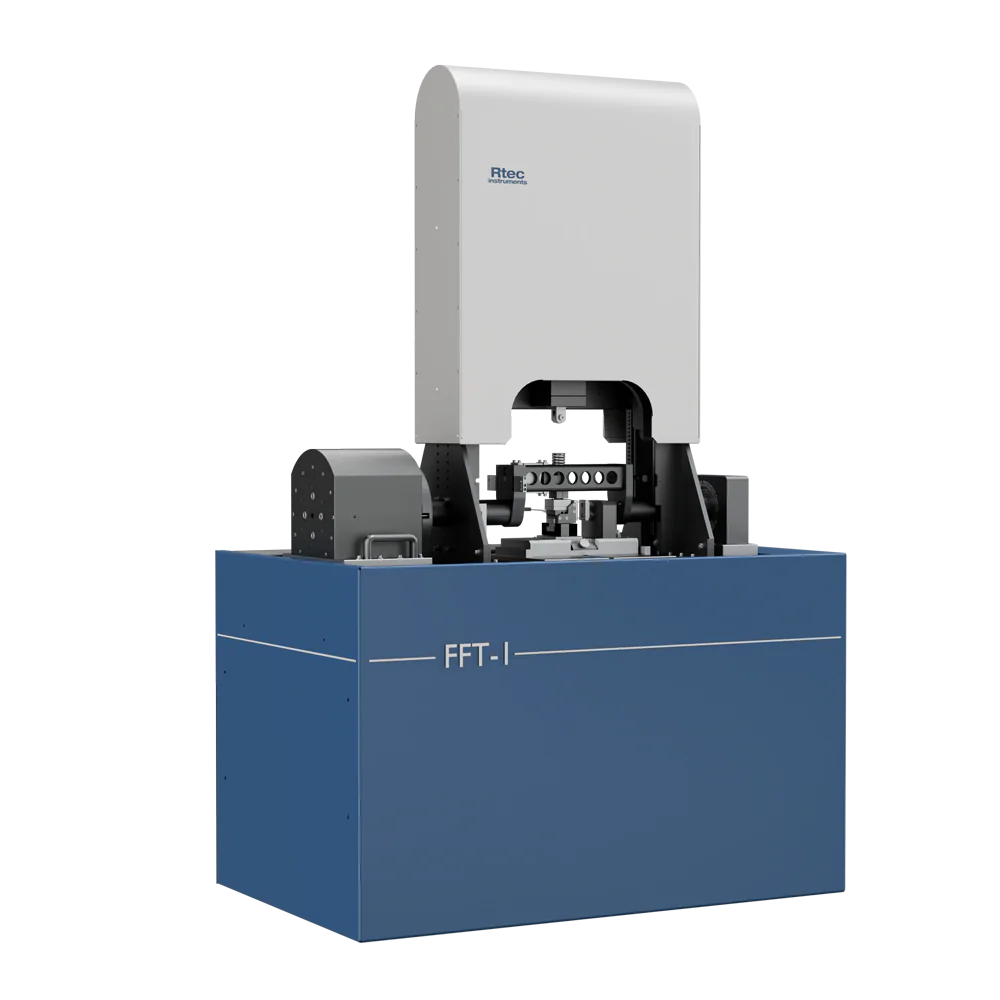
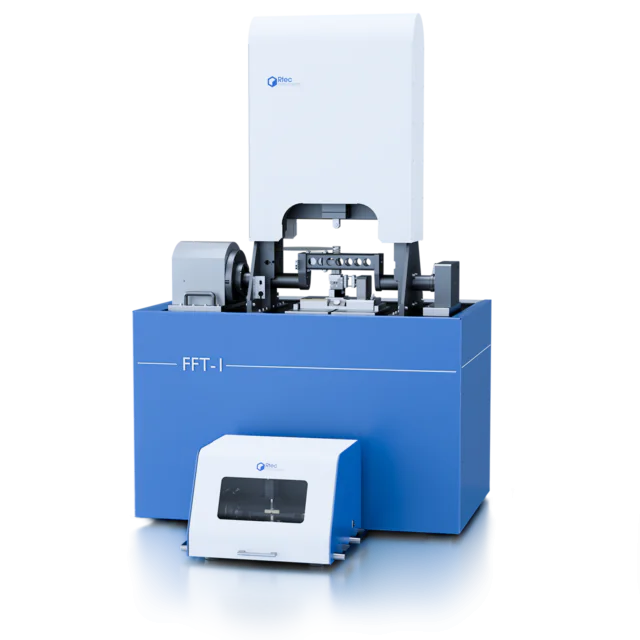
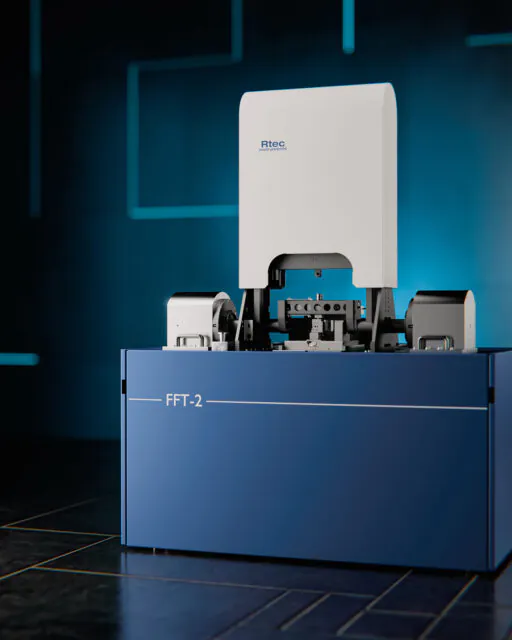
FFT-1, FFT-2 Floor-standing fretting test machines with single or dual voice coil drive and 1 nm position resolution
The FFT-1 and FFT-2 are floor-standing, high-force fretting testers designed for accurate and repeatable wear, friction, and fatigue studies. Advanced voice coil actuation combined with frictionless magnetic flexure guidance provides exceptional motion control with 1 nm position resolution and precise force measurement. The FFT-1 features a single voice coil for standard applications, while the FFT-2 uses dual voice coils to deliver twice the force capacity for demanding test conditions. Real-time friction monitoring, programmable motion profiles, and superior dynamic performance enable reliable characterization of materials, coatings, lubricants, and components, making the FFT series the ideal solution for advanced fretting research and product development.
KEY FEATURES
Real-Time Down Force Control
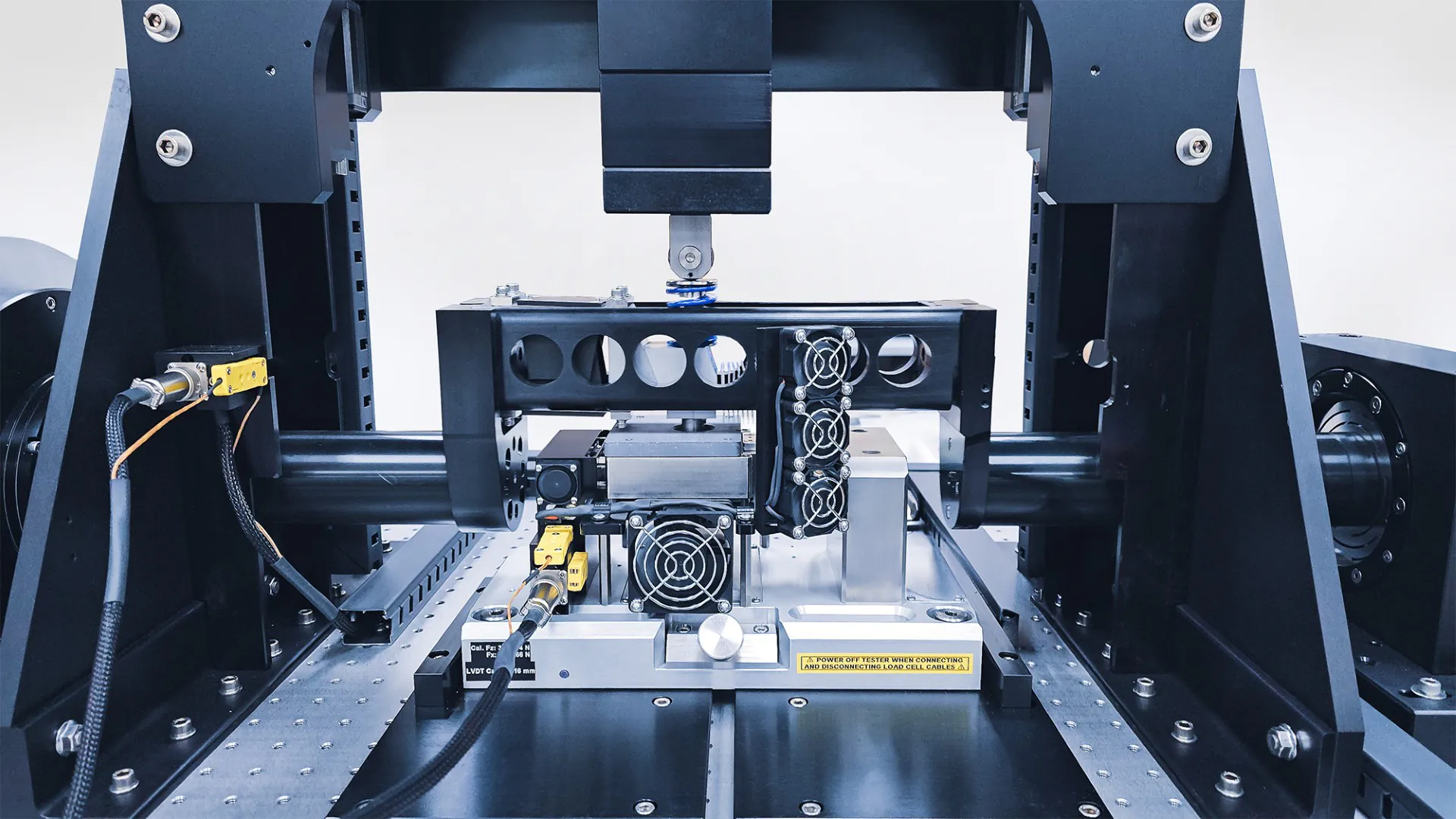
Real-Time Down Force Control automatically maintains the programmed normal load by continuously compensating for contact wear throughout the test. Advanced closed-loop force control ensures stable contact conditions, delivering superior accuracy, exceptional repeatability, and reliable friction and wear measurements. Ideal for long-duration fretting, fatigue, and durability testing under consistent loading conditions.
Single or Dual Voice Coil Drive (1Hz to 500Hz)
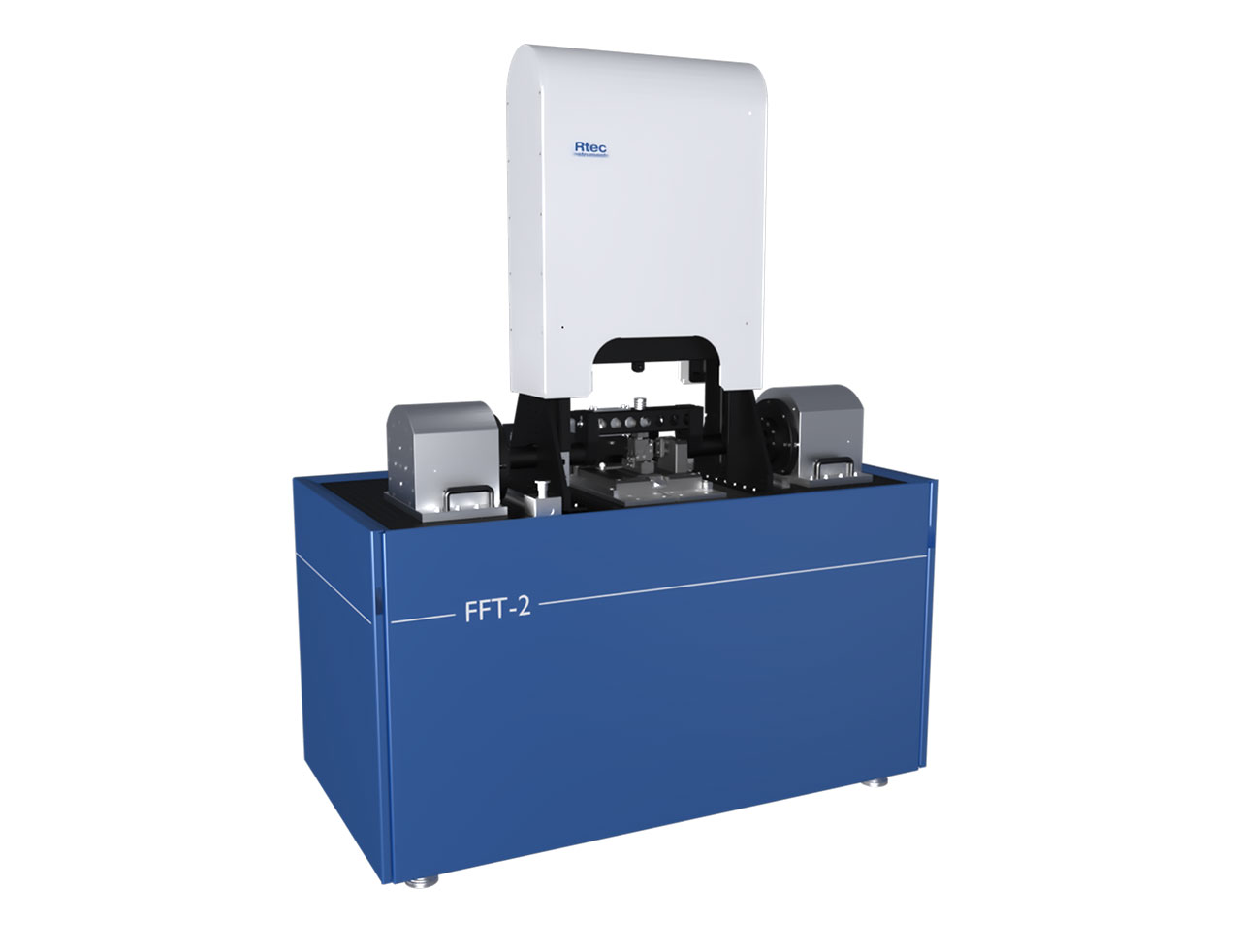
An electromagnetic voice coil actuator delivers precise linear reciprocating motion from 1 Hz to 500 Hz. The FFT-1 features a single voice coil for standard testing, while the FFT-2 incorporates dual coils to double the force capacity. Both floor-standing systems provide exceptional dynamic performance for demanding, high-power fretting wear and fatigue applications.
High Accuracy Position Control from few um
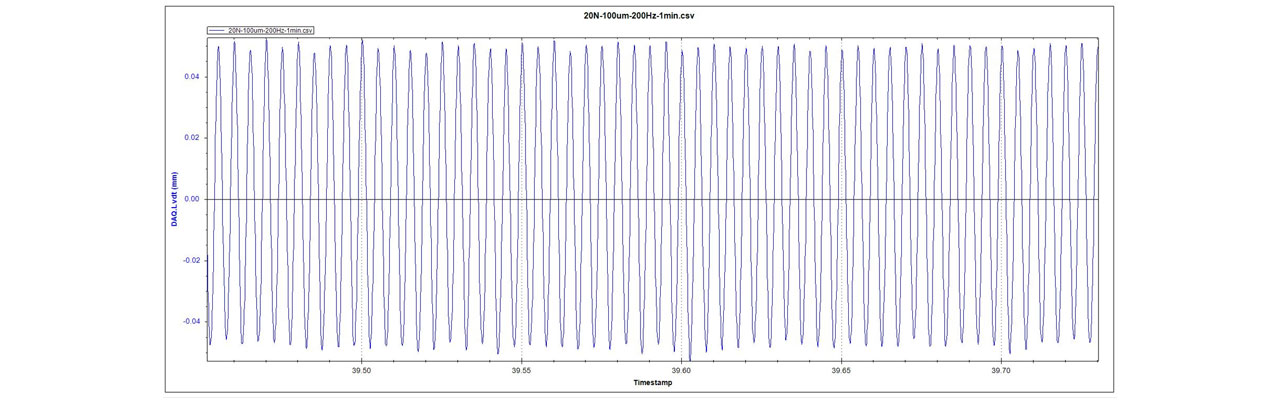
High-accuracy displacement control delivers up to 1 nm resolution for precise fretting wear, fatigue, and tribology testing. Advanced closed-loop motion control provides micron-level stroke accuracy, ultra-low noise, and fast dynamic response, ensuring stable micro-motion over millions of cycles for highly repeatable and reliable wear and friction measurements.
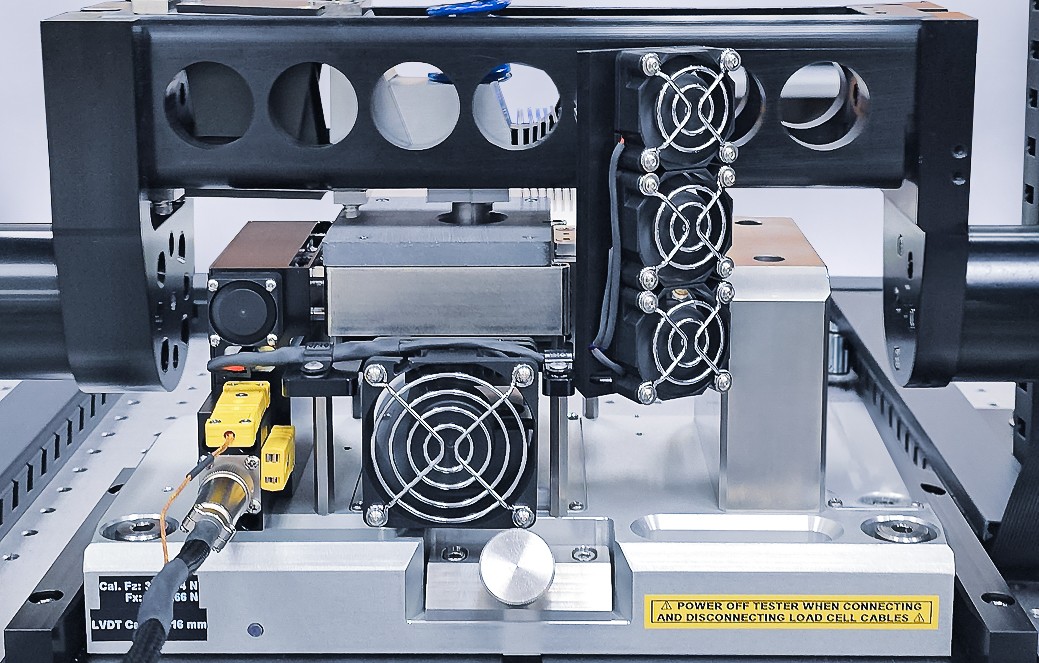
Test Under Real-World Conditions (room to 800 °C)
Evaluate fretting wear, friction, and fatigue from ambient temperature to 800°C using advanced environmental control. Simulate real operating conditions encountered in aerospace, automotive, energy, and industrial applications to generate accurate, application-relevant data and accelerate material selection, coating development, and product reliability.
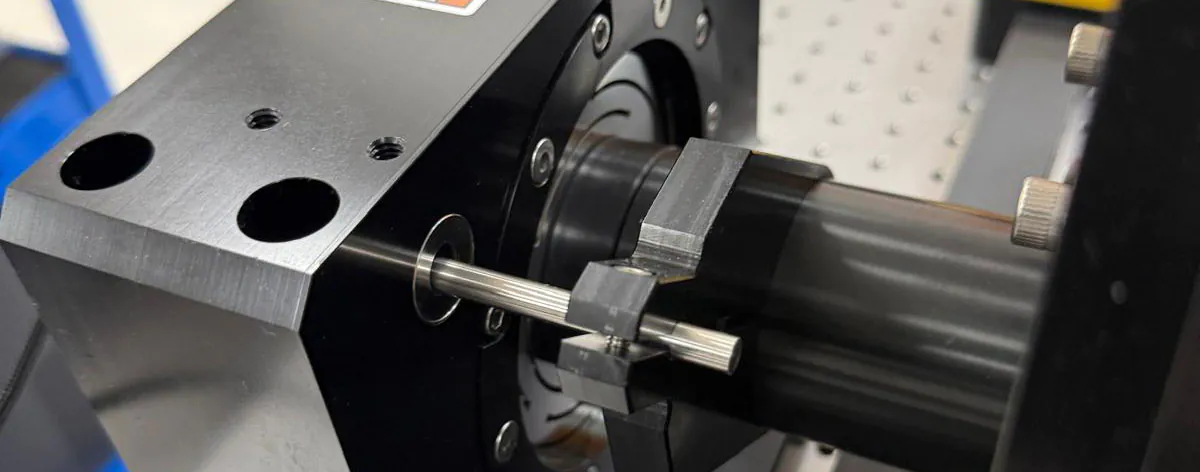
Frictionless Motion for Superior Accuracy
The frictionless magnetic flexure design eliminates bearing friction, delivering pure reciprocating motion and exceptional waveform accuracy. Intelligent closed-loop control automatically compensates for friction changes, maintaining constant stroke amplitude and ensuring highly repeatable fretting, wear, and fatigue testing over millions of cycles.
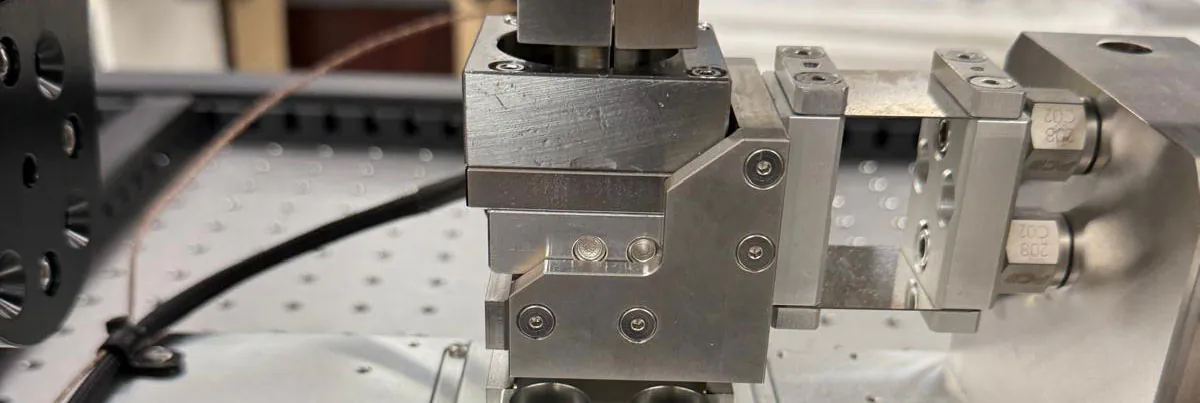
Capture Every Friction Event
High-frequency piezo force sensors and ultra-low-noise electronics measure friction in real time with exceptional sensitivity. Detect wear transitions, fretting regime changes, and early damage initiation before visible failure, delivering deeper insights into material behavior and more reliable tribological performance evaluation.
More about
Why High-Load Fretting Testing Matters
Fretting damage occurs when two contacting surfaces experience small oscillatory movements under high contact pressure. Unlike conventional sliding wear, wear debris remains trapped within the contact, accelerating friction, material degradation, crack initiation, and premature component failure. Critical components such as splines, dovetail joints, bolted connections, bearing seats, and electrical contacts are particularly susceptible to fretting under heavy loads.
Reproducing these demanding operating conditions requires more than a standard fretting tester. The FFT-1 High Power Fretting Tester is specifically engineered for high-load fretting, wear, friction, and fatigue testing, delivering exceptional force capacity, nanometer-level displacement control, and real-time friction measurement. Its frictionless magnetic flexure technology, voice coil actuation, and advanced environmental options enable researchers to accurately simulate real service conditions, optimize materials and coatings, and improve component durability with confidence.
Lubricants and Greases Under High Contact Loads
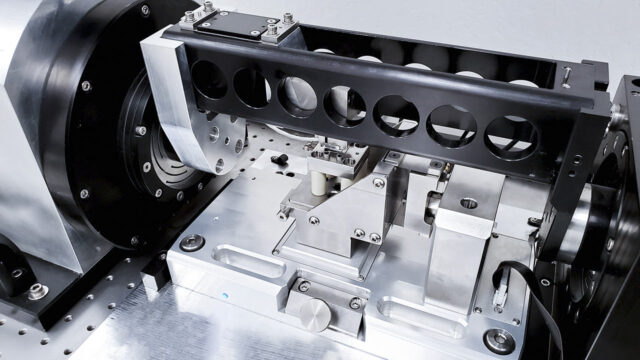
The true performance of lubricants and greases can only be evaluated under realistic contact pressures. High-load SRV (Schwingung, Reibung, Verschleiß) testing reproduces the severe oscillating conditions experienced by gears, bearings, splines, valve train components, and electrical contacts, revealing lubricant film strength, friction behavior, wear protection, and additive performance. The FFT-1 and FFT-2 support testing in accordance with recognized standards including ASTM D5706, ASTM D7421, ASTM D7594, ASTM D7605, and ISO 19291, while also enabling custom high-load fretting and lubricated wear tests. High-power voice coil actuation and optional liquid containers reproduce real operating conditions, accelerating lubricant development, qualification, and durability assessment.
Materials and Coatings Under High Friction Forces
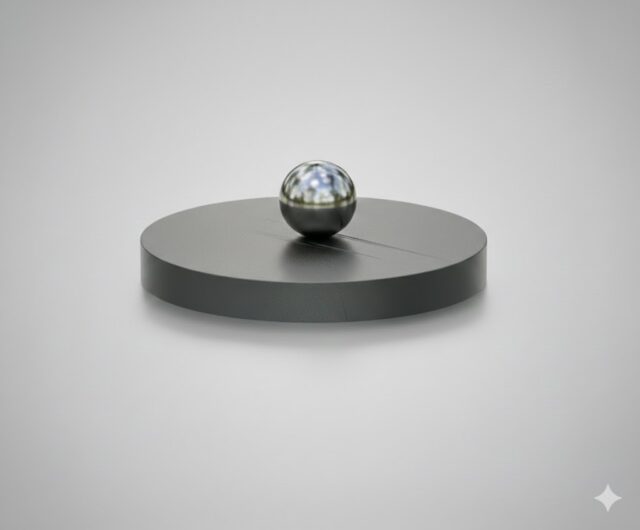
Modern engineering materials and advanced coatings are increasingly required to operate under extreme contact pressures, high friction forces, and repetitive micro-motion. Accurately characterizing their performance demands a high-force fretting system capable of reproducing real service conditions. The FFT-1 and FFT-2 generate application-level contact loads while high-frequency piezo friction sensors capture friction forces in real time with exceptional sensitivity. Optional acoustic emission, electrical contact resistance (ECR), and other in-line sensors detect crack initiation, coating failure, and fatigue damage long before catastrophic failure occurs. Combined with nanometer-resolution displacement control and frictionless magnetic flexure technology, the FFT Series provides unmatched accuracy for evaluating titanium alloys, aerospace materials, surface treatments, PVD and DLC coatings, ceramics, and other high-performance materials under realistic fretting conditions.
No technical specifications available.