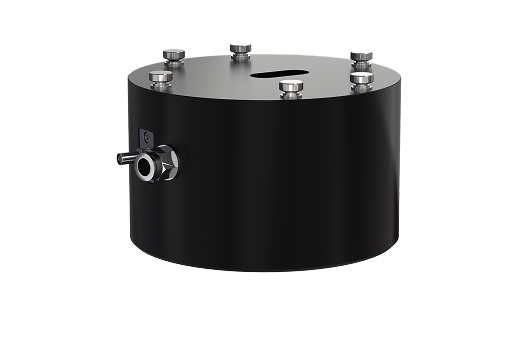
Humidity
The Rtec Instruments Humidity Control Chamber enables precise tribological testing under controlled relative humidity conditions from 5% to 95% RH — directly on your MFT tribometer. Study how moisture affects friction, wear, and coating performance to reproduce real-world environmental conditions for electronics, pharmaceutical, automotive, and advanced materials research.
More about
The Rtec Instruments Humidity Control Chamber is a closed-loop environmental tribology solution enabling precise control of relative humidity from 5% to 95% RH during friction, wear, and surface mechanical testing. Humidity is one of the most critical and often overlooked environmental parameters in tribology — moisture levels directly influence friction coefficients, wear mechanisms, surface adhesion, tribofilm formation, and coating durability across a wide range of materials and contact conditions. By integrating a humidity-controlled chamber directly on the MFT tribometer platform, researchers and engineers can accurately reproduce real-world environmental conditions and study tribological behavior under controlled moisture levels — from ultra-dry conditions to near-saturation humidity. The closed-loop multi-channel humidity and temperature controller ensures stable, uniform, and repeatable humidity throughout the test, eliminating environmental variability that would otherwise compromise data quality.
Compatible with all Rtec MFT tribometer modules — including rotary, linear reciprocating, fretting, and scratch configurations — the humidity chamber supports both standard tribology test protocols and advanced environmental research. Combined with the MFT-5000’s patented in-line 3D optical profilometer, friction, wear, and surface topography data are captured automatically in real time under controlled humidity conditions. The humidity chamber is the ideal solution for electronics and MEMS reliability testing, pharmaceutical tablet coating tribology, automotive seal and polymer research, aerospace lubrication studies, and any application where moisture-dependent tribological behavior must be accurately characterized.
Primary Applications
Electronics and MEMS reliability testing, pharmaceutical tablet and coating tribology, automotive seal and gasket materials, aerospace lubrication and dry lubricant research, polymer and rubber tribology, biosensor and biomedical surface testing, corrosion-assisted wear studies, and any material system where friction and wear behavior is sensitive to environmental humidity.
Why Control Humidity in Tribology Testing?
Humidity profoundly affects tribological behavior across virtually all material systems. Water molecules adsorb on surfaces, altering surface energy, adhesion forces, and lubrication film formation. For metals, increased humidity can accelerate oxidative wear and tribocorrosion. For polymers and ceramics, moisture changes friction coefficient and wear rate significantly. For MEMS and microelectronic components, even trace humidity levels alter electrical contact resistance and surface adhesion. Controlling humidity during tribology testing is therefore essential for generating meaningful, reproducible data that accurately reflects real-world service conditions — and for developing materials, coatings, and lubricants with validated performance across their full environmental operating range.
No technical specifications available.
Compatible products
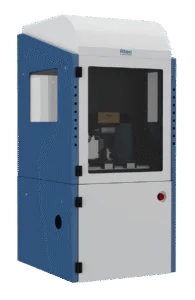
MFT-5000
Multi-Function Tribometer
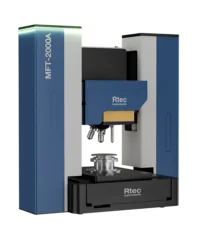
MFT-2000
Compact Multi-Function Tribometer
SMT-5000
Nano & Micro Indentation, Scratch and Tribology Testing combined with 3D Profilometry